ClassPass - Evolving the global fitness platform from a simple booking tool into a motivation-driven, habit-building experience.
- Role
- UX Research, UI Design
- Duration
- 4 months
- Tools
- Figma, FigJam


The problem
ClassPass offers ultimate flexibility through its credit model. However, high flexibility often lacks structure. Without a fixed routine, maintaining long-term workout consistency becomes the core friction point for users.
The Research
To maximize ClassPass’s core advantage, I conducted qualitative user interviews and synthesized research to understand how to bridge the gap between flexibility and long-term commitment. Mapping user behaviors across Frustrations, Preferences, Constraints, and Social Drivers revealed key friction points in building a workout routine.


The Solution: Driving bookings and retention through transparent discovery and social accountability.
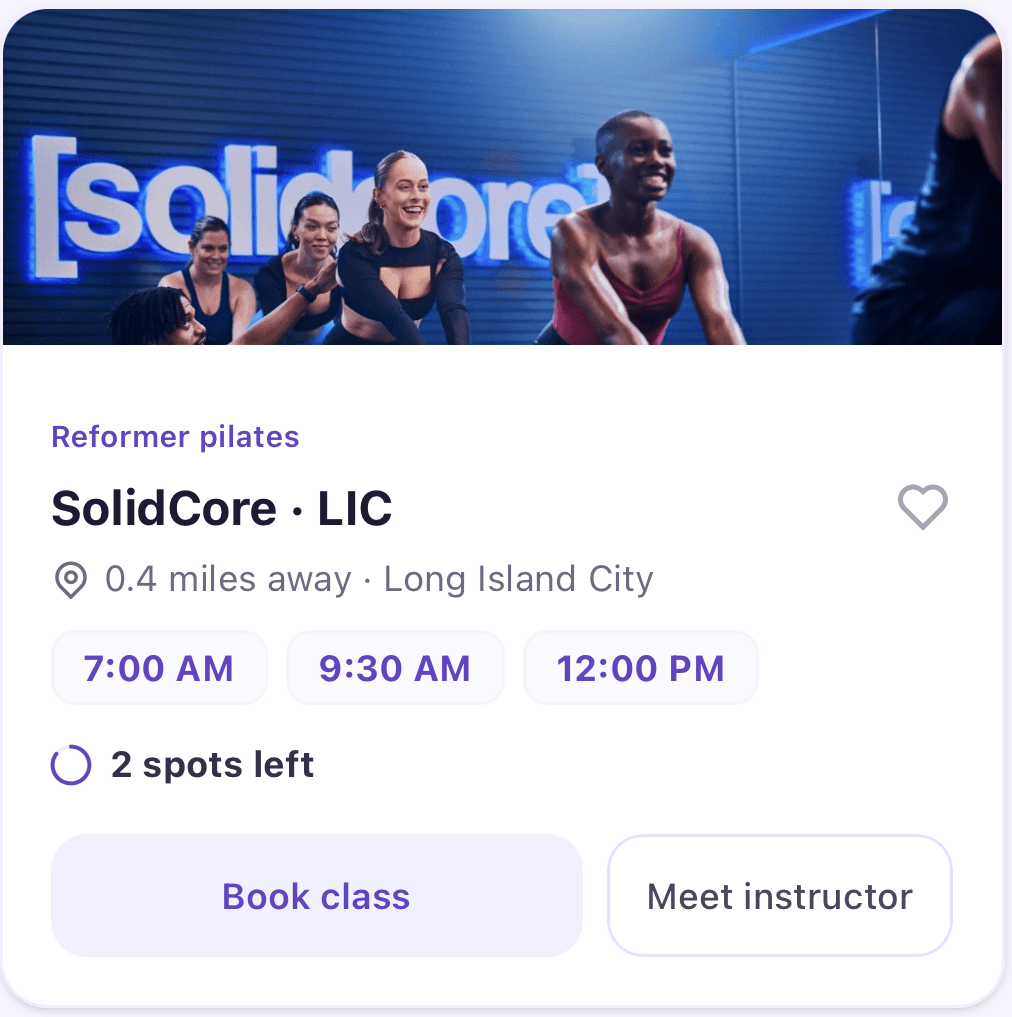
The redesign solves user drop-offs by focusing on two practical features. First, introducing transparent discovery gives users a clear preview of the class vibe, eliminating hesitation and increasing booking confidence. Second, integrating a frictionless "gym buddy" dynamic creates the social accountability needed to keep users motivated and naturally drive long-term consistency.
Key Workflows
Core Product Pillars
Reframing the onboarding experience to drive trust and retention
By leading with empathy and acknowledging the struggle with consistency, the new onboarding builds immediate trust. It replaces tedious forms with frictionless, tactile profiling, capturing baseline data upfront so the user's first dashboard is instantly personalized and ready for action.

Replacing endless browsing with strategic booking constraints reduces decision fatigue and secures actual attendance.
The discovery flow is designed to reduce decision fatigue and encourage active commitment. Intuitive filtering allows users to quickly isolate preferred workout formats. To prevent schedule hoarding and drive genuine attendance, a strategic 7-day booking window creates a subtle sense of urgency.
Finally, a seamless 'Save' feature lets users curate a personal ecosystem of favorite studios, drastically reducing friction for future bookings.
Revealing the instructor’s style and class vibe upfront eliminates hesitation and drives booking confidence.
A major barrier to booking a new class is the anxiety of the unknown. Users often hesitate when they don't know the energy level, teaching method, or musical vibe they are walking into. The 'Meet the Instructor' profile solves this transparency gap by visualizing the exact experience through tactile sliders and a direct Spotify playlist integration. By setting clear expectations before the user commits, this feature removes friction and replaces it with anticipation.
A privacy-first connection model fosters social accountability while ensuring absolute psychological safety.
Leveraging the retention power of a "gym buddy" requires strict boundaries to prevent unwanted interactions. The community feature utilizes a tiered trust system, starting with opt-in visibility and an ephemeral 48-hour connection window. Initial outreach is intentionally restricted to guided templates, and free messaging is only unlocked after users demonstrate mutual commitment by attending three classes together. This progressive trust model builds authentic workout partnerships without compromising user privacy.
Transforming verified connections into micro-communities that drive collaborative bookings.
Once the progressive trust barrier is cleared, the messaging hub facilitates seamless coordination. Users can build goal-oriented groups exclusively with their verified network, maintaining the platform's safety standards. By embedding actionable class invitations directly within the chat interface, the design eliminates the friction of external coordination and translates social momentum into immediate reservations.
Live Prototyping with AI & Cursor
Design doesn't end at the static mockup. To validate the user experience, I built a functional prototype of the core flows using Cursor and AI-assisted coding. Working directly with front-end code and Tailwind CSS allowed me to test tactile elements in a live browser environment. This hands-on approach bridges the gap between design vision and production reality.

Defining Success: How we'll measure impact.

